

How AI Is Powering Small Business Growth in 2026
Something interesting is happening in the small-business world. Tools that once felt like experimental artificial intelligence, automation platforms, and predictive software are quietly becoming everyday infrastructure. Not flashy, just useful.
A recent report from LinkedIn suggests that 2026 may become a defining era for small businesses using AI. And when you look at the numbers, the shift is hard to ignore.
Small companies are discovering something big: AI isn’t just software anymore, it’s a growth engine.
AI Is Becoming a Strategic Asset for Small Businesses
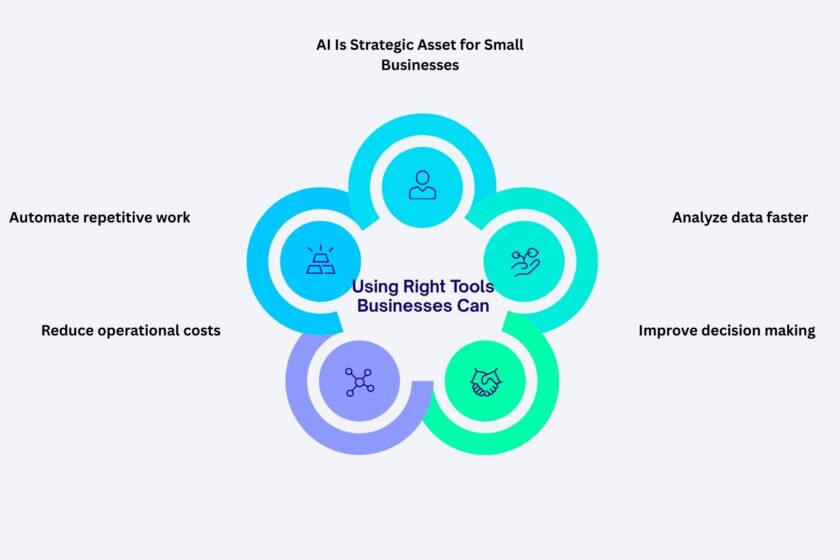
The conversation around AI used to focus on productivity tools. That framing feels outdated now.
“Small businesses are not just smaller versions of big companies, they are the real drivers of innovation and economic growth.” Peter Drucker
That sentence carries weight.
Because small businesses rarely have the luxury of large teams or massive budgets. They need technology that reduces friction, not complexity. AI does exactly that.
With the right tools, businesses can:
- Automate repetitive work
- Analyze data faster
- Reduce operational costs
- Improve decision-making
Perhaps most importantly free up time for the work humans do best. Thinking, building relationships, creating ideas. That shift changes everything.
The Research Behind the AI Shift
The LinkedIn report isn’t based on small samples, it analyzes insights from:
- 160 million professionals
- 18 million small businesses
That scale matters. When data sets reach that size, patterns become difficult to dismiss. And the pattern here is clear: Small businesses are adopting AI faster than many analysts predicted.
AI Is Lowering the Barrier to Entrepreneurship
Starting a business used to require layers of support. You needed staff. Systems. Marketing infrastructure. Today? A single founder with the right AI stack can run operations that previously required an entire team.
The LinkedIn research revealed something surprising:
Half of U.S. small businesses say AI inspired them to consider entrepreneurship.
That’s a major cultural shift. Automation handles repetitive tasks. AI assists with research, planning, and execution. Suddenly the barrier between idea and execution gets smaller. Even LinkedIn profiles reflect the trend.
The report identified a 69% increase in professionals adding “founder” to their profiles. In other words, AI isn’t just supporting businesses. It’s creating them.
Why AI Is Becoming an Equalizer for Small Businesses
Here’s a reality small business owners know well. Competing against large corporations can feel impossible. Bigger companies have bigger budgets. Bigger teams. Bigger technology stacks. AI changes that equation. Small teams can now access tools that once required enterprise resources.
Businesses are already using AI for tasks like:
- Drafting emails
- Summarizing meetings
- Analyzing business data
- Planning marketing strategies
- Forecasting demand
These capabilities compress time. What once required hours of manual work can happen in minutes. That speed advantage is why many small companies describe AI as an equalizer. It gives smaller organizations leverage.
How AI Improves Daily Operations
Small business owners care about practical outcomes. Does technology save time? Reduce costs? Improve results?
According to the LinkedIn report, 57% of small businesses believe AI improves their daily work lives.
The benefits appear in several areas.
Customer Service
AI assistants can answer routine inquiries instantly. Human teams focus on complex issues instead.
Content Creation
Businesses use AI to draft social media posts, marketing emails, and blog outlines.
Hiring and Recruiting
AI tools help screen resumes and organize candidate information.
Data Analysis
Predictive systems identify patterns that would otherwise take analysts hours to uncover.
The result? Better decisions faster.
Why AI Literacy Is Becoming a Competitive Advantage
Technology adoption alone isn’t enough. Skills matter. Raghavan highlights AI literacy as a key differentiator for small businesses. Teams that understand how to work with AI tools will outperform those that don’t. Think about it. Two companies may have access to the same software. But the team that knows how to prompt, refine, and interpret AI outputs will produce stronger results. Knowledge becomes leverage.
This is why many organizations are investing in AI upskilling programs for employees. Not because AI replaces workers. Because workers who understand AI become far more powerful.
Why Authentic Human Voices Still Matter
There’s a paradox in the AI conversation. Yes, automation is increasing. But trust still belongs to humans.
Many small business owners use AI tools for content creation — drafting ideas, summarizing research, organizing thoughts. Yet they also recognize that authentic human voices remain essential.
According to the report:
Nearly 75% of audiences verify information through people they trust.
That means credibility doesn’t come from algorithms alone.
It comes from:
- Experts
- Employees
- Customers
- Community leaders
Businesses that highlight genuine perspectives build stronger relationships. Technology helps deliver the message. Humans make it believable.
Why Networking Still Drives Business Growth
Another insight from the LinkedIn research stands out. Technology accelerates productivity. But relationships drive growth.
Small business owners continue relying on networks for:
- Customer referrals
- Hiring decisions
- Strategic advice
- Partnership opportunities
In fact, many founders report that their professional networks help them navigate uncertainty more effectively than any software tool. AI may handle tasks. But humans build trust. And trust still fuels business.
FAQS
How are small businesses using AI in 2026?
Small businesses use AI for automation, data analysis, marketing content creation, customer service assistance, and strategic planning.
Why is AI important for small businesses?
AI reduces operational costs, increases productivity, and allows smaller teams to compete with larger companies.
Can AI help entrepreneurs start businesses?
Yes. AI tools automate administrative tasks and research, making it easier for founders to launch and operate lean startups.
Is AI replacing small business workers?
Not necessarily. In most cases, AI augments human work by handling repetitive tasks while employees focus on higher-value activities.
Key AI Adoption Insights for 2026
Several numbers from the LinkedIn research reveal the scale of this shift:
- 160 million professionals analyzed
- 18 million businesses included in the research
- 69% increase in professionals adding “founder” to profiles
- 57% of small businesses believe AI improves daily work
- 75% of audiences verify information through trusted individuals
Together, these numbers tell a story. AI adoption isn’t experimental anymore., it’s operational.
The Future of Small Businesses
Technology rarely changes industries overnight. But sometimes it quietly reshapes the foundation underneath them. That’s what’s happening with AI.
Small businesses are discovering that automation and intelligent tools allow them to operate faster, leaner, and smarter. The companies that learn to combine AI capabilities with human creativity will have a powerful advantage. Because technology can generate insights. But people build the relationships that turn insights into growth. And that combination? That’s where the real opportunity lives.
Key Takeaways
- AI is becoming a strategic growth driver for small businesses
- Business process Automation reduces operational workload and costs
- AI literacy is emerging as a competitive advantage
- Entrepreneurs are launching businesses faster with AI support
- Authentic human voices remain essential for trust and credibility
- Professional networks continue to play a major role in growth
Small businesses aren’t just experimenting with AI anymore. They’re building their future on it.
Schedule a Free AI business consultation